Logging Terms Every Landowner Should Know (Beginner-Friendly)
Smart Logging in NWA —
Logging Terms to Know
Logging can feel overwhelming when you're selling timber for the first time. The industry has its own language, and understanding these terms helps you protect your land, evaluate offers correctly, and feel confident throughout the process. Here are the most important logging terms every landowner in Northwest Arkansas should know — explained in simple, everyday language.
1. Timber Cruise
A timber cruise is a professional assessment of your trees. A forester or buyer walks your property to estimate volume, species, quality, and value. This is the first step before any harvest.
2. Stumpage
This is the price paid to you (the landowner) for standing timber. Stumpage varies based on species, size, log quality, terrain, and current market prices.
3. Sawlogs vs. Pulpwood
- Sawlogs are high‑quality logs used for lumber — they bring premium pricing.
- Pulpwood is lower‑grade timber used for paper or chips — lower pricing.
4. Diameter at Breast Height (DBH)
This is the tree's diameter measured 4.5 feet off the ground. DBH matters because it determines log class, value, and whether the tree qualifies as a sawlog.
5. Board Foot
The standard measurement used in the hardwood industry. One board foot equals a piece of wood 1 inch thick, 12 inches long, and 12 inches wide.
6. Thinning
A selective harvest removing smaller or overcrowded trees. Thinning helps the best trees grow faster, improves forest health, and increases future value.
7. Select Cut
A selective harvest where only certain trees are removed — usually the mature, high‑value hardwoods like walnut, oak, and hickory.
8. Clear-Cut
A full harvest of all merchantable timber in a designated area. Clear‑cuts are common for pine and low‑grade tracts but less common for premium hardwood stands.
9. Skidder
A heavy machine used to pull logs from the woods to the log deck. Modern skidders minimize ground impact and keep the operation efficient.
10. Log Deck (or Landing)
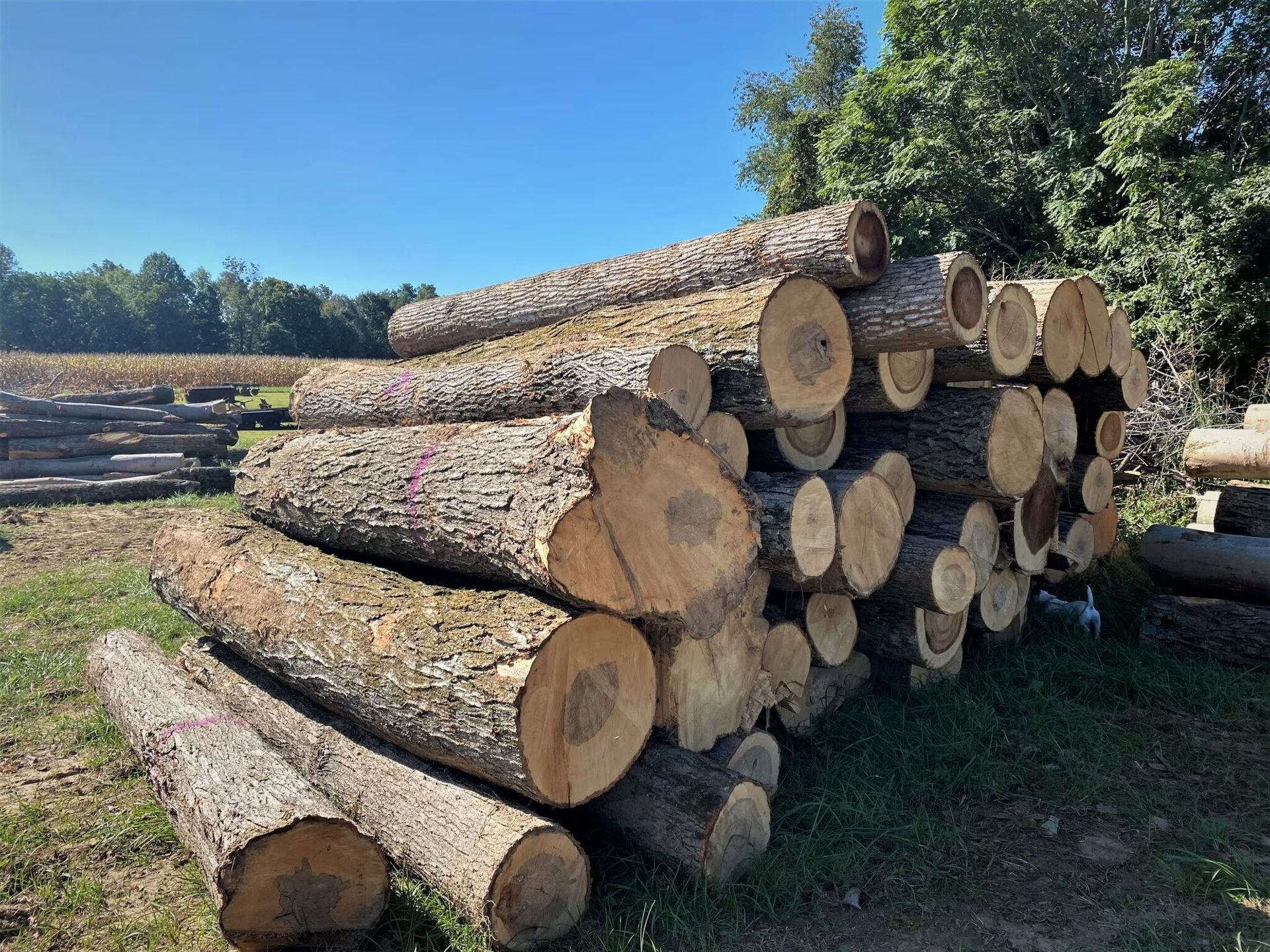
The staging area where logs are sorted, stacked, and loaded onto trucks headed to the mill.
11. Mill-Run Pricing
When a company owns the mill, they don’t need a middleman. Mill‑run pricing means higher pay for landowners because logs go straight from your property to the mill — no markup along the way.
12. Slash
Branches, tops, and non‑merchantable wood left behind after a harvest. Responsible companies manage slash properly or offer cleanup options.
13. Best Management Practices (BMPs)
Environmental standards that protect streams, soil, and wildlife during logging. A reputable company follows BMPs every time.
Signs Your Timber’s Ready
Why These Terms Matter
Understanding these terms helps you:
- Evaluate timber buyers accurately
- Understand how pricing is determined
- Know what type of harvest your land needs
- Avoid being underpaid or misled
When you know the language, you make better decisions — and protect the value of your land.
Let’s Walk Your Land —
Ready to Sell Timber?
Call today or submit the form on our website to schedule a free timber evaluation. Long Valley Timber pays top dollar because we harvest and mill our own logs — no middlemen, no hassle.